
"Breadcrumbs" by Andrew Plimpton / Hayden's Ferry Review
- Short Story Shoutout

- May 13
- 5 min read
"This game began, with no explanation, the summer I turned seven."
The author notes for “Breadcrumbs” (2,600 words), by Andrew Plimpton in the fall / winter 2025 issue of Hayden’s Ferry Review, tells us that Plimpton is a playwright. This is no surprise, as his entertaining and ambitious story uses subtext—the playwright’s best friend—to do a lot of the heavy lifting.

Most great stories are, at their heart, mysteries. From the prosaic (Was it Colonel Mustard in the library with a candlestick?) to the tragic (a “man” tries to convince a “girl” to do something “perfectly natural” to “just let the air in” in Hemingway’s “Hills Like White Elephants”), giving readers less usually translates to more mystery.
The less we (the reader) know, the more we are compelled to infer. That inference pulls us into the story, deeper and deeper, until we are practically co-creators. Our contributions take the form of expectations that are, ideally, dashed and replaced by better, more compelling alternatives crafted by talented writers. We are lifted to a higher place through their invention, brought to thoughts and ideas that we are fully open to receiving for the co-creator’s dance. This is one of the superpowers of writers not saying what they mean to say, of speaking between the lines.
“Breadcrumbs” starts with its young narrator (seven-years-old) following a trail of literal breadcrumbs being dropped by the child’s grandfather across the old man’s oceanside property.
This game, as the now-adult narrator looks back on it, is partially explained away by the child’s penchant for “eavesdropping and sneaking into places where I was not welcome.” The narrator, from the very start, carries the burden of responsibility for whatever is about to go down (“I believe that my grandfather invented this game to keep me occupied.”) Is this a red herring? The actions of the grandfather immediately feel like grooming. But that’s just a feeling. And where does that feeling come from? One word, in the sentence quoted above; the narrator believes.
Subtext already has its hooks in you.
The narrative device from here on out is elegant in its simplicity. We toggle back and forth between two story lines. The first is the recollection of a summer day spent spying on the grandfather that the narrator remembers vividly (“the hottest day of the season”, one in which a “storm would [soon] break the heat”…a little jalapeno-infused foreshadowing to brighten the dish.)
The second is a series of brief, expository flashes of life with the child-narrator and family at the home of their grandparents across years. The big house is “full of good hiding places.” All of the grandchildren are “prey to a particular breed of restlessness.” There’s a “hint of hostility in the air” when the entire family is present, a feeling that “was not the absence of love; it was merely something that stood in its way.”
Tellingly, it is the grandmother who wrestles the most with this vague sense of disquiet, along with the family. The grandfather sits “behind his spectacles and [takes] no notice.”
The best expression I can come up with to describe the unsettling feeling Plimpton steeps us in—which, dramatically, is akin a pressure cooker with an unsecured lid—is come-hither. And the narrator feels it, too.
On this particular summer day, the grandfather leaves the house quietly—with no loaf of bread, leaving no breadcrumbs in his wake—and the narrator follows. As the child has been trained to, perhaps? We get a lot of sensory detail as the pair makes their way along a wooded shoreline path (the buzz of insects, the lapping of waves, the beating of the narrator’s small heart), but we don’t get insight. No interior thoughts about the situation. This effectively presents a blank screen for us to project intent upon. What does the grandfather have in mind? Is he even aware of the grandchild’s presence? Well of course he is…Maybe? Clock what you think may be coming as you read. The whole exercise is pretty damn Rorschachian.
What we do get is archetypal. The grandfather reaches a fork in the path and must choose one of two directions forward. The light begins to wane. The pair make their way through a “tunnel of beach grass.” The grandchild thinks of home, of mom and dad, before choosing to feed the undeniable need to explore the unknown as darkness falls.
Where they wind up may be along the lines of your expectations, but with just enough unseemly detail to elevate the stakes significantly. This journey the child has been taken on is not an appropriate trip for someone so young. And to add insult to injury, we don’t get clued in to the grandchild’s gender until the very end, which is a first-rate creep-out.
The climax is very satisfying, and this is no small feat. The higher the ladder the diver climbs, the longer the drop to the water, and the tougher it is to stick the landing. Beyond the bold, dramatic catharsis, there’s plenty of fine detail here to luxuriate in, especially the rich image systems. Keep an eye out for different kinds of mirrors and what they imply. Most important among them, though, is the bread loaf. It jumpstarted the story and it’s the payoff at the end, what all those crumbs have been leading to.
Hayden’s Ferry Review is a semi-annual, international literary journal edited by the MFA students at Arizona State University. A small portion of the publication is solicited from established authors, while the majority of their contributors are chosen from the thousands of manuscripts the journal receives each year. In addition to two yearly print issues, HFR publishes online-exclusive web content.
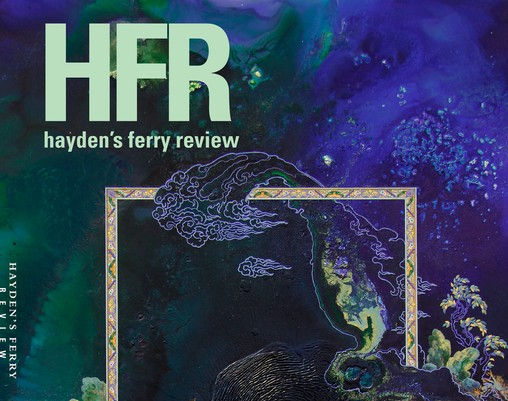
HFR looks for well-crafted work that takes risks, challenges readers, and engages emotionally and artistically. The makeup of their editorial team changes every year, and they pride themselves on their values of inclusivity and multiplicity, seeking touplift emerging writers and artists. They are interested in creative work that takes risks with language and form, work that challenges boundaries/borders and systems of power, work that examines historically marginalized experiences, as well as work that identifies as hybrid or genre-nonconforming.
HFR is not currently open for submissions (you can subscribe to their Substack, to keep up to date on their re-opening), but their general prose guidelines note submissions of up to twenty pages (though they favor pieces under seventeen pages).
A big Short Story Shoutout thank you to Andrew Plimpton and Hayden’s Ferry Review for the spellbinding “Breadcrumbs.”
Three small housekeeping notes if you’ve made it this far—and thanks for that :)
I’ve had a few subscribers write to note that they were excited to read the stories we cover, and that they searched them out on their own to do that. Please know that we do that work for you…just click on the story-title hyperlink (it’ll be bold & orange) at the top of the page and, whoop, there it is. In each and every column.
Another project we’re undertaking to make your short-story-submission-to-lit-pubs process easier, is the compilation of a spreadsheet that details the type of stories each of the magazines we cover is looking for. While it won’t be a substitute for reading each lit pub’s issues (or reading Shoutout), it can be a another arrow in your working-towards-publication quiver.
We’ll have it up-to-date shortly. Just message to ask for it and you shall receive. It’s free to subscribers, as our column is free to everyone, all the time.
Lastly, if you’re not yet a subscriber, please become one and encourage write-minded friends to join us. More readers means more eyes on the aspiring writers we shoutout, and more attention paid to the literary publications who work tirelessly to give writers the platforms they need to further their careers.
~*~
Are you reading enough short stories to know what lit pubs are looking for?
Don’t have the time to search for them on your own and still get writing done?
Short Story Shoutout can help.
Subscribe and get introduced to the best online fiction weekly for the low, low cost of nothing.



Comments